Beyond the data lake: what enterprise AI needs from data
Data lakes and cloud warehouses are built to answer how many and how much. Enterprise AI has to answer why and whether. This article explains the gap, and what a data foundation for AI requires beyond storage.
After a multi-year program, a large enterprise completes its data platform. Every system feeds a single lake, the warehouse is clean, and dashboards are accurate to the hour. Then the first AI pilot receives a simple question from the procurement team: can this supplier be paid early under its contract?
The answer is not in any table. It sits in a contract PDF, an amendment agreed by email, and a payment policy revised last quarter. The platform holds all three files. It cannot say what they mean together.
Many organizations reach this point after significant investment in modern data platforms. Data lakes and cloud warehouses such as Snowflake and Databricks are very good at what they were built for. Enterprise AI asks a different question of the same data.
What data platforms do well
Data platforms store information at scale, model it in tables, and answer questions about how many and how much: revenue by region, claims by month, inventory by site. For reporting and analytics they are the right foundation, and nothing in this article suggests replacing them.
What decisions run on
Operational decisions depend on why and whether: whether a payment is permitted, whether a claim is covered, whether a procedure was followed. Those answers live in contracts, policies, case files, emails, scanned forms and manuals. In a data lake they are stored as files; in a warehouse they are often not present at all. They are kept, but not understood.
Five things AI needs that storage alone does not provide
| Requirement | In a lake or warehouse | What enterprise AI needs |
|---|---|---|
| Meaning | Documents stored as files or text fields | Passages read, understood and linked to the people, assets and cases they concern |
| Relationships | Joins on shared keys | A contract linked to its amendments, the supplier, and the policy that governs it |
| Versions | The latest copy, or periodic snapshots | The version in force on a given date, kept alongside every later one |
| Permissions | Access controlled by table or role | Access enforced for each document and passage, carried into every answer |
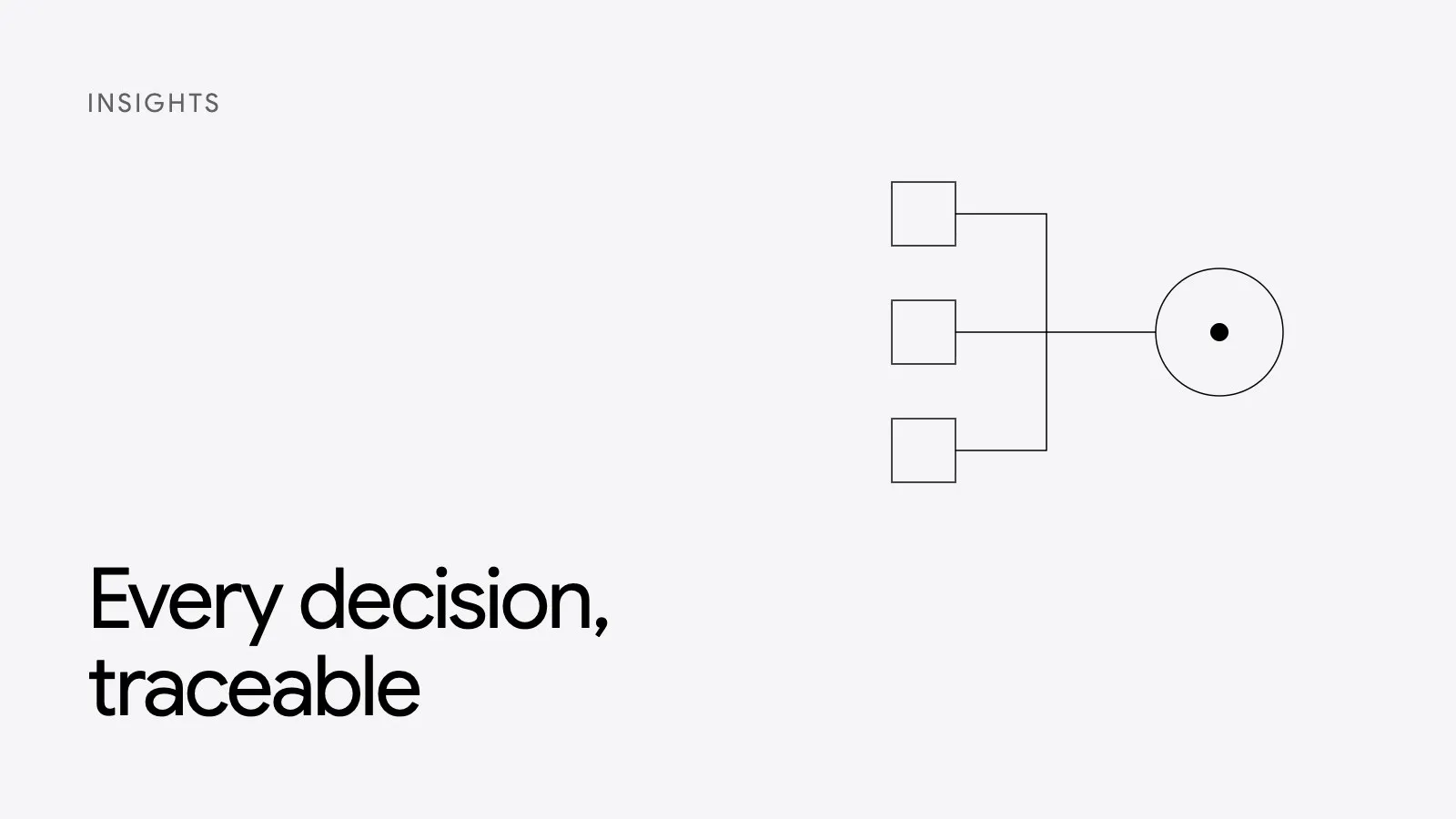
| Evidence | Lineage of pipelines and tables | Every answer pointing to the exact passage, page and version it relied on |
The version question
A policy changes on March 1. On March 3, an AI assistant connected to a shared document store answers a question using the February text, because both copies sit in the same folder under similar names. The error is noticed only when a customer quotes the new policy back to the company.
The storage held both versions correctly. Nothing in it recorded which one applied. Effective dates, superseded documents and the ability to answer “as of” a given date are properties of knowledge, not of storage, and they are where many AI answers quietly go wrong.
A knowledge layer, not another copy
The answer is not to move everything into yet another platform. It is a knowledge layer that works alongside the existing lake and warehouse. Such a layer reads documents and records where they already live, preserves their structure, relationships and versions, inherits their permissions, and gives AI agents a source they can cite.
The warehouse continues to answer what happened. The knowledge layer answers why it was allowed.
Questions to ask of a data foundation for AI
- Can every answer cite the exact passage and version it used?
- Can it answer as of a past date, not only as of today?
- Does it enforce the same permissions as the source systems?
- Does it link documents to the records and cases they describe?
- Can it run where the data must stay: on-premises, hybrid or air-gapped?
How NU Tech approaches it
Dudl, the Enterprise Knowledge Engine within AxP, is built as this layer. It ingests documents and records from existing systems, organizes them as connected and versioned knowledge, enforces existing permissions, and runs inside the organization’s own infrastructure. The agents in N-Sight then reason over that knowledge, with every decision traceable to its source.
The data platform remains in place. Dudl makes its contents usable for decisions.
To see how Dudl works with existing data platforms, request a demo.