RPA 3.0: building the third generation of automation with agentic AI
The first two generations of robotic process automation followed scripts. The third reasons. Here is how automation got here, how an AI agent actually works, and how NU Tech is building the next generation.
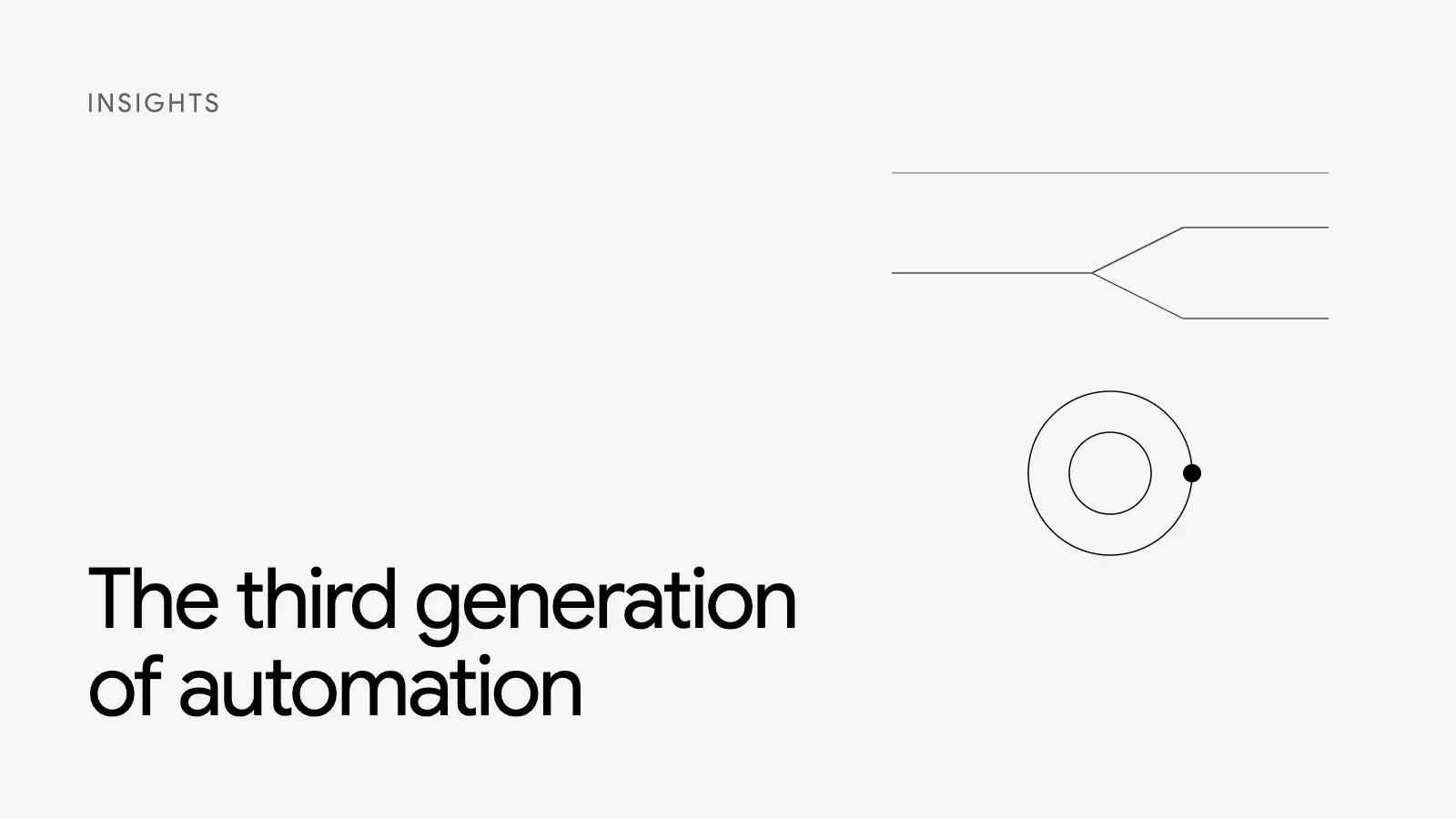
For twenty years, enterprises have tried to take repetitive work off people’s desks. Each wave of robotic process automation (RPA) went further than the last — and each hit a wall. NU Tech is building the third generation: automation that reasons, not just repeats.
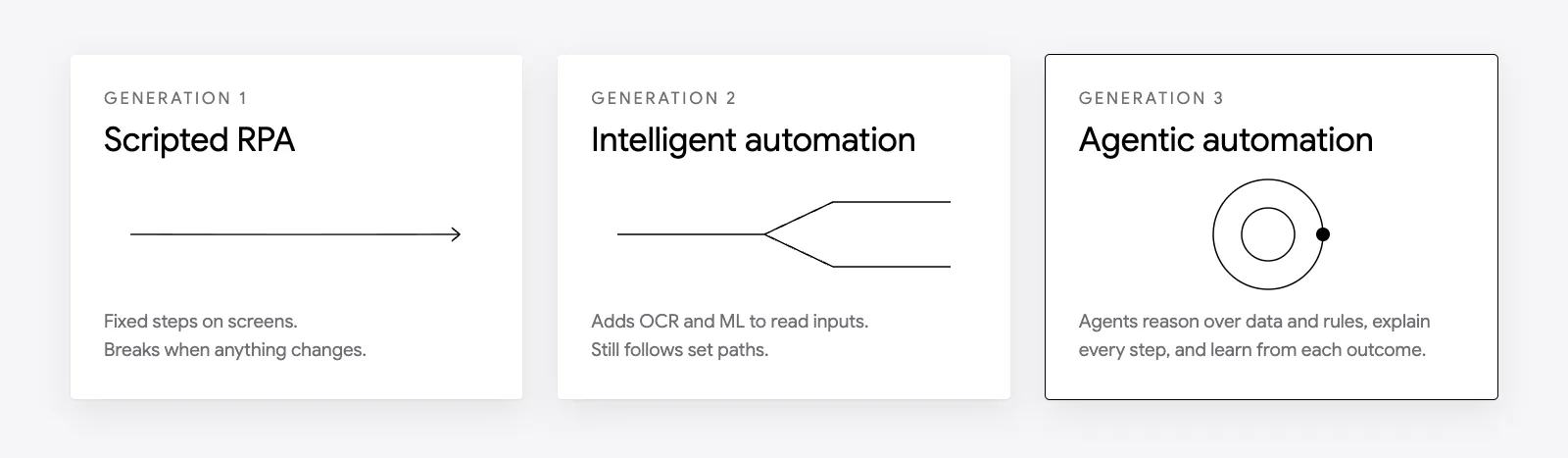
RPA 1.0 — Scripted automation
The first generation copied what a person does on screen: click here, copy this field, paste it there. Software “robots” followed a fixed script, step by step, across the same applications people used.
It worked well for high-volume, perfectly repeatable tasks. But the robots knew the steps, not the work. A moved button, a renamed field or an unusual case was enough to stop them, and every exception went back to a person. Keeping scripts running became a job of its own.
RPA 2.0 — Intelligent automation
The second generation added machine learning around the scripts. OCR and document models could read invoices, forms and scanned pages; classifiers could sort incoming work. Automation could now take in unstructured inputs, not just clean screens.
The core stayed the same: a predefined path. The models read the input, then the script decided what to do with it. When a case didn’t fit the path — a new document type, a policy change, a judgment call — it still fell out to a person. Most of an operation’s real work lives in those cases.
RPA 3.0 — Agentic automation
The third generation replaces the fixed path with agents that reason. Instead of following a script, an agent reads the case, looks up the relevant rules and records, decides the next step, and explains why. When it isn’t sure, it asks a person — and the answer becomes part of what it knows.
| RPA 1.0 | RPA 2.0 | RPA 3.0 | |
|---|---|---|---|
| How it works | Fixed script on screens | Script plus ML to read inputs | Agents that reason over data and rules |
| Inputs | Structured screens and fields | Documents, forms, scans | Any format, with the context around it |
| Exceptions | Stop and hand over | Mostly hand over | Reason through, or ask a person |
| Explains itself | No | Partly | Every step, with sources |
| Improves over time | Only when re-scripted | When models are retrained | From every review and outcome |
How an agent works
An agent is not a single model call. It is a runtime that works through a task in a loop, using a set of services at every step.
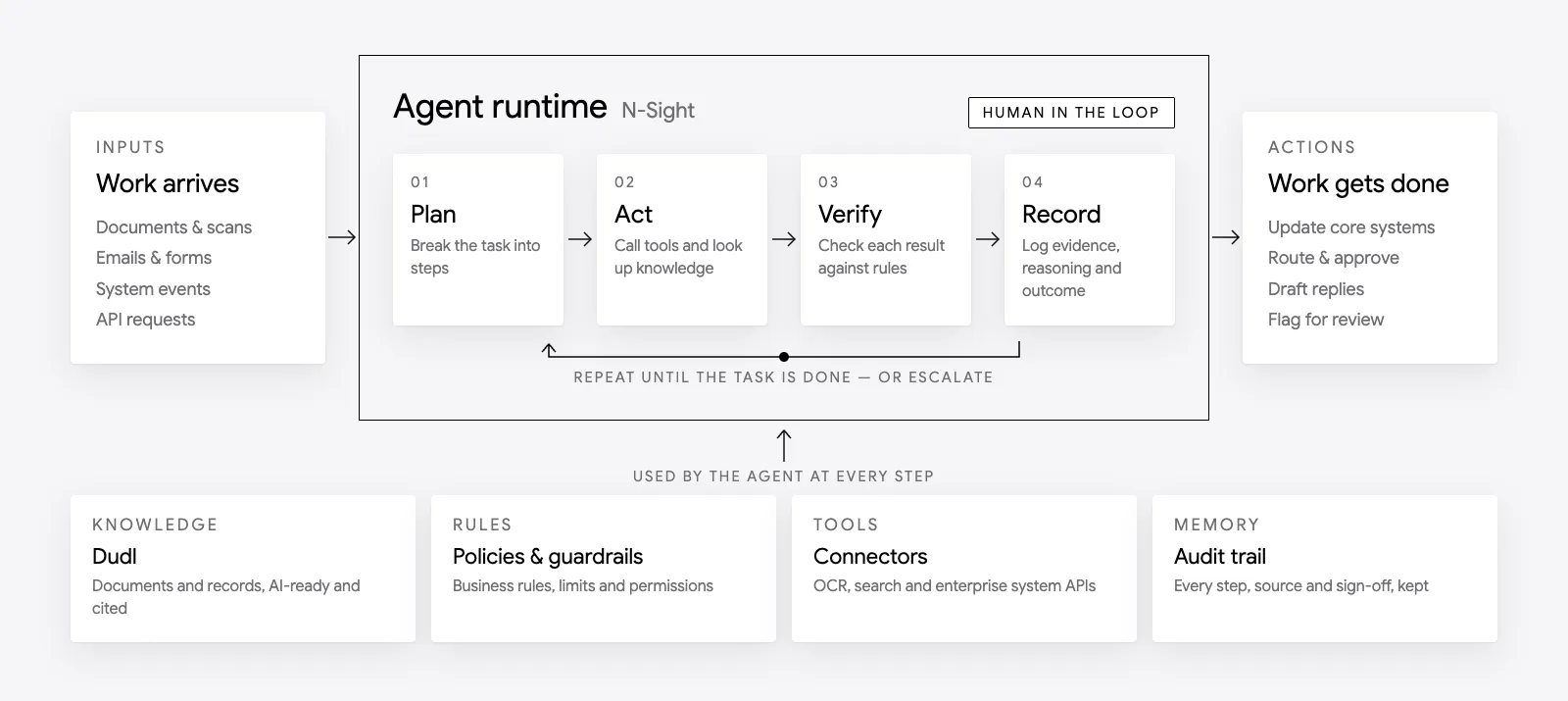
- Plan. The agent breaks the task into steps: what needs to be read, checked and decided.
- Act. It calls tools — OCR, search, lookups in the knowledge base, APIs into core systems — to gather what each step needs.
- Verify. Each result is checked against business rules, limits and permissions before anything moves forward.
- Record. Evidence, reasoning and outcome are logged, so every decision can be traced later.
The loop repeats until the task is done — or until the agent reaches a point where a person should decide, and escalates.
| Service | What the agent uses it for | In NU Tech’s platform |
|---|---|---|
| Knowledge | Facts, documents and past cases to reason over | Dudl, the Enterprise Knowledge Engine |
| Rules | Policies, thresholds and permissions to check against | Configured in N-Sight |
| Tools | Reading documents and acting in enterprise systems | Connectors, OCR and system APIs |
| Memory | A full record of every step, source and sign-off | The AxP audit trail |
How NU Tech builds it
Agentic automation only works in an enterprise if people can trust it. That is why NU Tech builds it on three foundations:
- Knowledge first. Dudl, the Enterprise Knowledge Engine, turns documents, records and data into one AI-ready knowledge base, so agents work from the organization’s own facts.
- Decisions that can be traced. N-Sight, the Agentic Decision Engine, runs the agent loop on that knowledge, checks every step against business rules, and ties each decision to its evidence and reviewer.
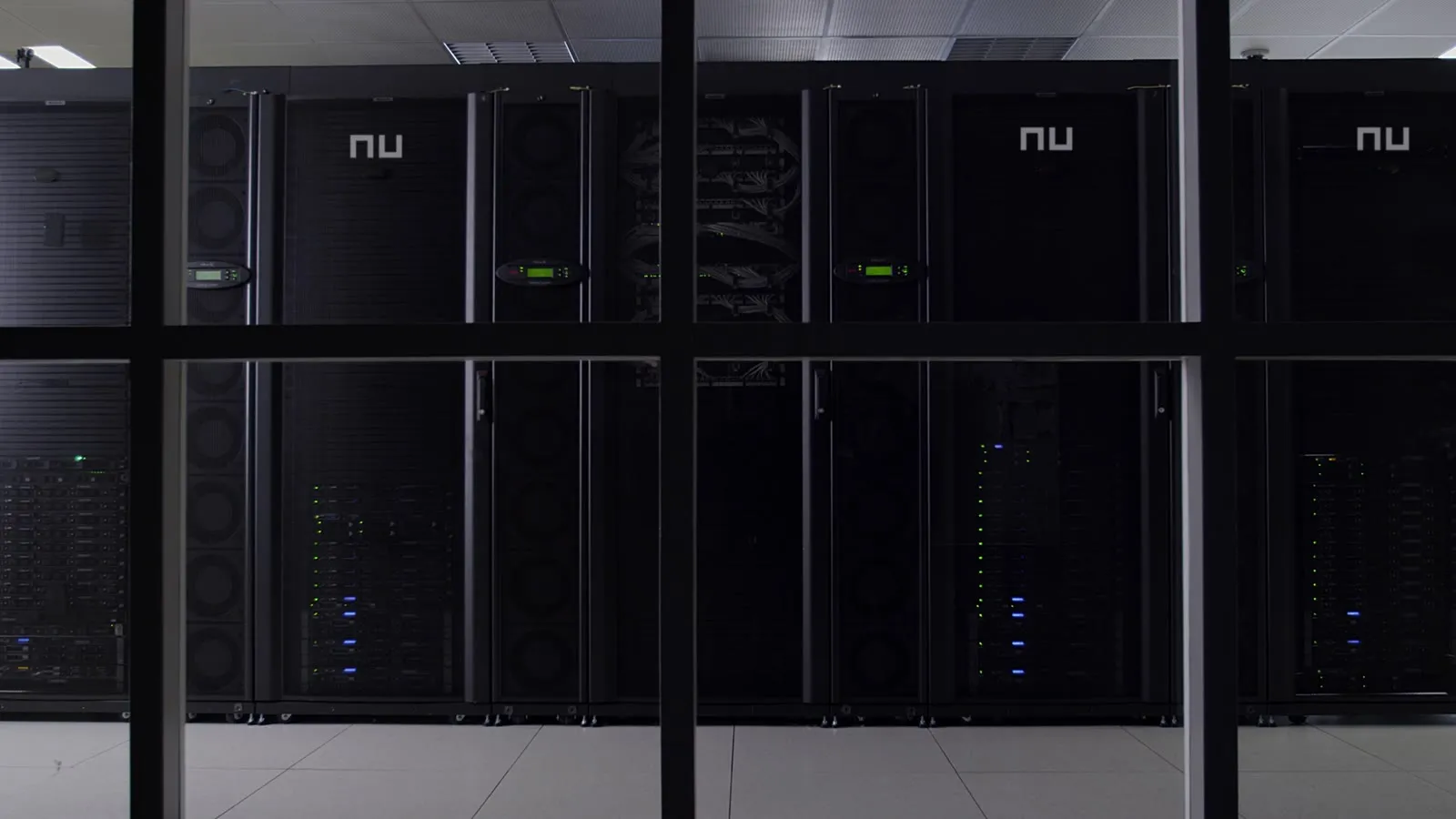
- Inside the walls. AxP, the AI Transformation (AX) Platform, runs on-premises, hybrid or air-gapped, so the most sensitive work can finally be automated.
Most companies can’t replace the systems they run on. Lumen, the hybrid AI copilot, brings agents into the tools and workflows teams already use, including in the browser.
What changes for teams
With RPA 1.0 and 2.0, automation took over the easy cases and left people with the hard ones. RPA 3.0 changes that balance: agents prepare even the complex cases — evidence gathered, rules checked, a recommendation made — and people make the final call where it matters. Every correction makes the next case better.
For teams running RPA today, the next generation can be seen on real processes: request a demo.